Aquatic Foods
Aquaculture supports nutrition globally, but undermines it in some countries
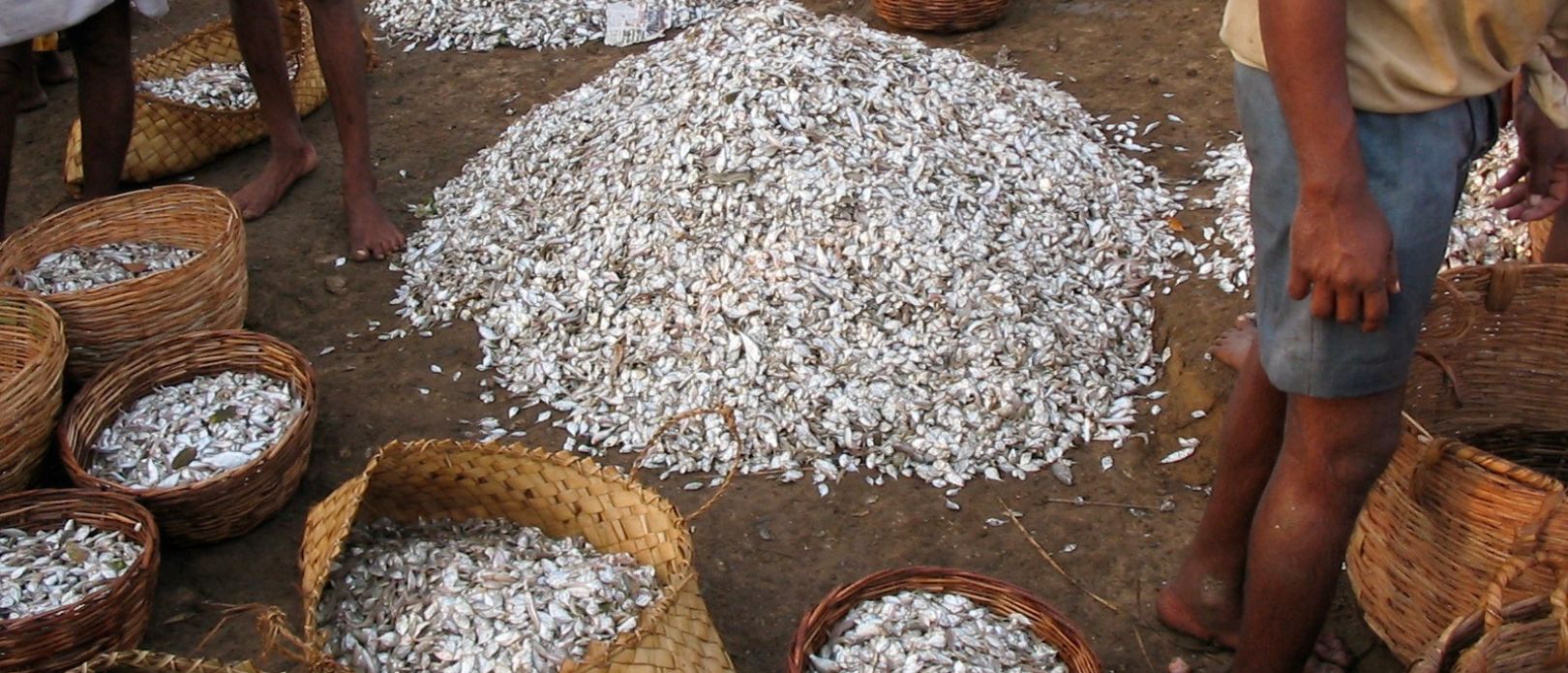
Landings of small pelagic fish that are mostly destined for fishmeal and fish oil on the Indian East coast. Photo: Max Troell
Aquaculture provides sufficient nutrients to meet the needs of up to 2.7 billion people for key nutrients such as Vitamin B12. But the feed that goes into these systems can diminish access to nutrition elsewhere.
Aquaculture, farming fish or seafood, is the single fastest growing food sector. But how much nutrition does it provide and for whom?
An international research team, led by researchers at Harvard T.H. Chan School of Public Health, with support from among others Centre researcher Max Troell, has looked at aquaculture’s nutritional benefits and distribution. The researchers synthesized novel global databases in aquatic food production, trade, and nutrient composition to quantify aquaculture’s global contribution to nutritional security.
Aquaculture plays a key role for nutrition and food security and the reliance on wild-caught fish and its implication has for a long time dominated policy, academic, and industry discussions.
Centre researcher Max Troell, co-author
In their study, they found that aquaculture provides sufficient nutrients to meet the needs of up to 2.7 billion people for key nutrients such as Vitamin B12. Most nutrients (76.8%) from farmed fish and seafood were consumed in the same country as they were produced.
However, some feeds used in aquaculture contain fishmeal made of wild-caught fish – and this can be imported from countries where access to nutritional foods is limited.
"Undeniably, aquaculture plays a key role in nutrition and food security, but we found a pattern where small-island and developing states lose critical nutrients by exporting wild-caught fish as aquaculture input," explained lead author Laura Elsler, Research Associate at the Harvard T.H. Chan School of Public Health.
Nutritional vulnerability
To understand whether aquaculture trade affects a nation’s nutritional vulnerability, the researchers assessed nutrient trade alongside the nutritional vulnerability of source and destination countries. They found that aquaculture exports primarily originated from nutritionally vulnerable countries (57.7% for fishmeal and 66.3% for farmed fish).
Salmon and shrimp are large fishmeal consumers and are also the most traded farmed species groups. In addition, shrimp trade was among the most inequitably traded taxa (55.4% of nutrients were traded inequitably).
"Aquaculture plays a key role for nutrition and food security and the reliance on wild-caught fish and its implication has for a long time dominated policy, academic, and industry discussions," said Max Troell, co-author and Associate Professor at the Stockholm Resilience Centre and Programme Director at the Beijer Institute of Ecological Economics.
If wild-caught fish could be retained within a country and repurposed, instead of being processed to fishmeal, up to 31 million undernourished could meet their nutritional needs.
Christopher Golden, senior author and Associate Professor of Nutrition and Planetary Health at the Harvard T.H. Chan School of Public Health, concluded "Every food that we eat will have environmental and nutritional tradeoffs. Aquatic foods are no different. Although there are many sources of aquaculture that are benefitting the nutritional security of the locations where they are produced, the entire aquaculture industry urgently needs a nutrition-centered development approach to ensure it delivers nutrients to places that need them most."
Elsler, L.G., Gephart, J.A., Zambroain-Mason, J., Cashion, T., Troell, M., Naylor, R.L., Agrawal Bejarano, R. & Golden, C.D. 2026. Global nutritional equity of fishmeal and aquaculture trade flows. PNAS.
-
Blue foods can help solve multiple global challenges
Blue foods – fish, shellfish, algae and aquatic plants – can be instrumental in solving multiple global crises, new analysis shows
-

Harnessing aquaculture for SDGs: A pathway to human and planetary heal...
Aquaculture contributes substantially to the Sustainable Development Goals, SDGs, but its future potential needs careful consideration of trade-offs, a new study shows