IPBES report
Businesses must transform or go under, biodiversity panel warns in new report
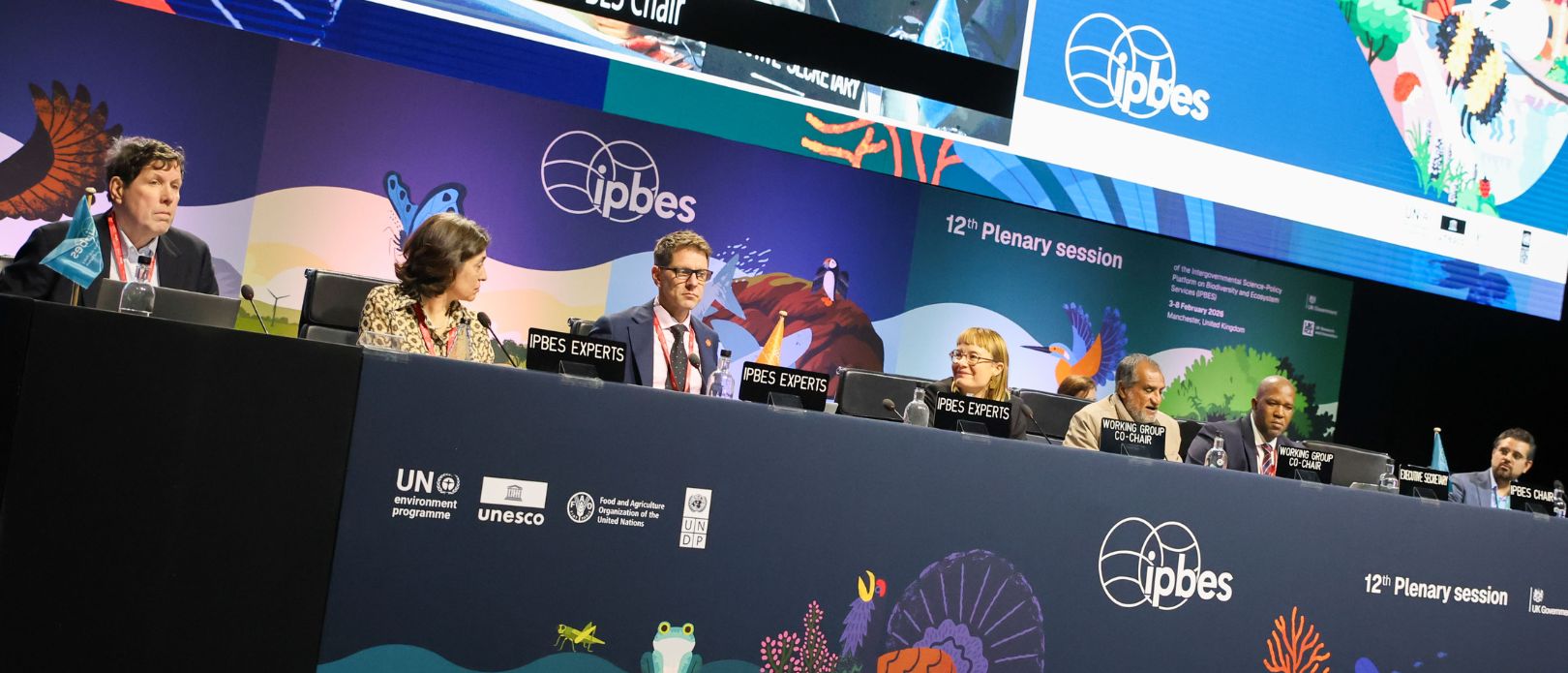
Session at IPBES Plenary 12 in Manchester, Feb. 2026. Photo: Anastasia Rodopoulou/IPBES
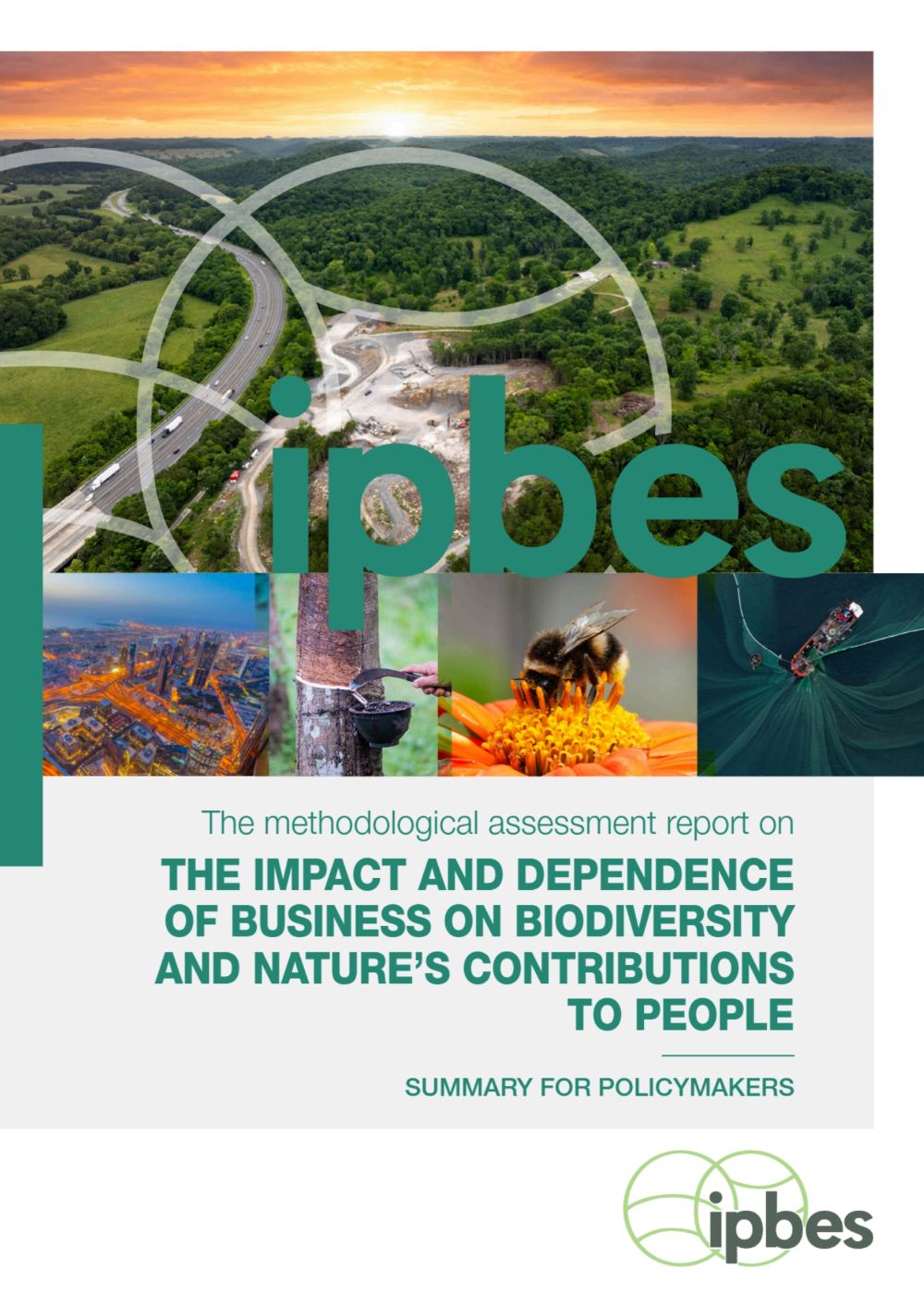
It is high time to redirect economic development so that it supports the nature it depends on, shows a new landmark report on biodiversity by the intergovernmental biodiversity platform IPBES, to which Centre researchers have contributed.
“The loss of biodiversity is among the most serious threats to business,” said Prof. Stephen Polasky, Professor at University of Minnesota and co-chair of the assessment. “Yet the twisted reality is that it often seems more profitable to businesses to degrade biodiversity than to protect it.”
Global economic growth has come at the expense of nature, resulting in major losses of biodiversity. These losses now pose significant risks to the economy, financial stability, and business, according to an IPBES assessment presented on 9 February 2026. IPBES, the Intergovernmental Science-Policy Platform on Biodiversity and Ecosystem Services is the biodiversity equivalent of the UN’s climate panel, the IPCC.
“As companies, what you need to do now is to consider nature as something real, both in your impact and in your risks. Because at some point, degraded ecosystems will become such a risk that certain things will become uninsurable,” says Beatrice Crona, Centre researcher who has co-authored one of the reports chapters.
The preparation of the report took three years, involved 79 experts from 35 countries, including Centre researchers Beatrice Crona, Lisen Schultz, Daniel Itzamna Avila Ortega and former Centre researcher Niak Sian Koh, and happened in consultation with Indigenous Peoples and local communities. It was co-chaired by among others Stephen Polasky, Professor at University of Minnesota, who is part of the Centre’s International Science Advisory Council.
“The new report provides a solid basis for better decision-making,” says Centre researcher Lisen Schultz, who has co-authored one of the reports chapters. “The messages have been approved by both scientists and member countries from across the world, creating a shared foundation to rely on.”
The current destructive business-nature relationship has arisen because economic trade-offs have consistently undervalued nature’s importance. All companies depend on materials and services from ecosystems, but they rarely have to pay for the damage their activities cause to nature.
Dangerous incentives
The report places strong emphasis on the context in which companies operate. These include laws and regulations, finance and economics, norms and values, technology and data, capacity and knowledge, all of which currently incentivize private short-term profits at the expense of ecosystems.
As an example, in 2023, global public spending on environmentally harmful subsidies amounted to about USD 2.4 trillion, topped up by another USD 4.9 trillion from private finance.
In contrast, activities that contribute to the conservation and restoration of biodiversity received only USD 220 billion from both public and private sources. That is as little as 3% of the environmentally harmful subsidies.
Enabling environment
The report emphasises that, with the right policies, as well as financial and cultural shifts, business can be transformed so that “what is good for nature is also what is best for profitability,” as Stephen Polasky puts it.
One of the key ways to getting there is better measurements and analysis of impacts and dependencies.
The report finds that less than 1 percent of publicly listed companies track their impacts on nature. Tools for measuring such impacts exist, and the report includes a methodology for them, as well as lists of actions that businesses and other actors can take now to address their impacts and dependencies, or enable environments for transformative business.
The Business and biodiversity assessment was agreed on and published at the twelfth session of the IPBES Plenary in Manchester.
IPBES is an intergovernmental platform and does not operate under any international convention or agreement. Its goal is to strengthen the interaction between science and policy to promote the conservation and sustainable use of nature, plants, and animals.
.png)